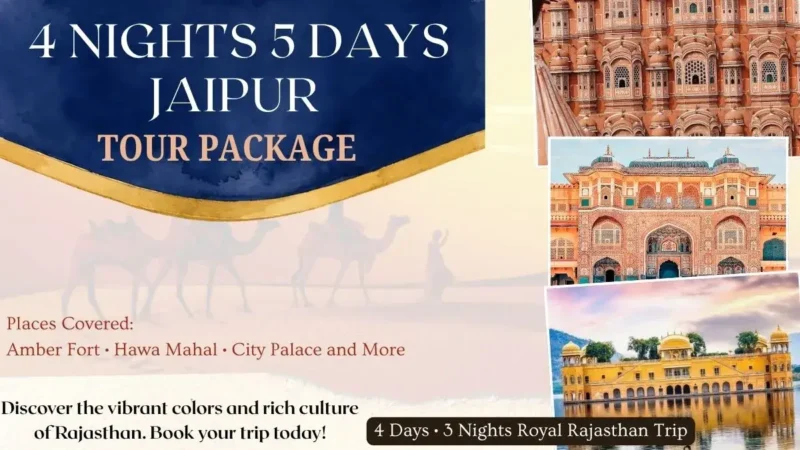
4 Nights 5 Days Jaipur Tour Package – Complete Itinerary and Price

Jaipur has been rightly called the Pink City. As you walk around the ancient bazaars, each wall, gate, and haveli will be covered with the same pink-red hue. The city had this color scheme applied in 1876 as part of a welcome ceremony for the Prince of Wales, and it has stayed on ever since. This 4-night and 5-day Jaipur tour package takes you through Jaipur, its forts, palaces, markets, and cuisine, without stuffing your itinerary in two hectic days.
For whom is this package suitable?

Those who are in Jaipur for the first time and confused on how to explore all the famous places comfortably.

Total distance covered: Roughly 120 to 150 km, depending on whether you add the optional day trip.

Duration: 4 Nights, 5 Days.

Best suited for families, couples, friends, practically anybody! Children can easily cope with this tempo, as well as the elderly who need a more relaxed timetable. Groups usually prefer to rent a 9 seater Urbania van in Jaipur because it enables everyone to stay together rather than travel separately in two cars.

Starting point: Jaipur city. Pickup can be arranged from the railway station, the airport, or Delhi, depending on how your package is booked.

Jaipur Festival Calendar (Best Time to Plan Your Trip)

Jaipur runs on festivals almost year-round, and if your dates line up with one, the trip changes completely.

Jaipur Literature Festival (January): Held at Diggi Palace, this is one of the biggest literary gatherings in Asia. Authors and readers from everywhere show up.

Makar Sankranti / Kite Festival (14 January): The sky turns into a kite battlefield. Terraces across the city fill up, and honestly, watching from a rooftop is half the fun.

Elephant Festival (March, near Holi): Decorated elephants, folk dancers, even elephant polo, all at the Jaipur Polo Ground.

Teej Festival (July-August): Women in bright green and red take out processions with swings and folk songs, welcoming the monsoon.

Gangaur Festival (March-April): A procession celebrating marital harmony, women in traditional dress carrying idols through the old city lanes.

If any of these match your travel window, ask your operator to add the festival grounds as a stop. It is usually a small tweak to the itinerary.

Why 5 Days Is the Ideal Duration to Explore Jaipur

You cannot really do Jaipur in a day or two, not properly anyway. There are three major forts, an entire walled old city of markets, a few museums, and some solid day-trip options just outside town. Five days lets you

See Amber Fort without rushing the elephant or jeep ride up the hill.

Give Nahargarh and Jaigarh their own day, since both sit on the same ridge and deserve unhurried time.

Walk the old city markets properly instead of cutting shopping short.

Fit in one extra day for Sambhar Lake or Chand Baori if you want it.

Keep the last day light, just shopping and the drive to the airport or station.

Go shorter than this and you will end up skipping either a fort or a market. Go longer and it is not really needed unless you are folding in Pushkar or Ranthambore too.

4 Nights 5 Days Jaipur Tour Package and Its Price

What you pay depends mostly on the hotel category, the vehicle, and when you are travelling. Here is a rough range.

Estimate Price of Jaipur Tour Package

Prices above are approximate. They shift with season, hotel availability, and group size, so confirm the current rate before you actually book.

Usually included: 4 nights hotel stay, daily breakfast, private vehicle for sightseeing, driver allowance, fuel, tolls, and parking.

Usually not included: Monument entry tickets, lunch and dinner, elephant or jeep charges at Amber Fort, and whatever you spend shopping.

Travelling as a bigger group changes things a bit. A tempo traveller hire in Jaipur is usually the smarter call over two sedans, since nobody gets split up and the driver just handles one group all day.

4 Nights 5 Days Jaipur Tour Itinerary

Day 1: Arrival in Jaipur and Local Sightseeing

Check into your hotel, rest for a bit, then head out for a half-day of sightseeing. Hawa Mahal is worth a stop from outside for photos. Walk into City Palace after that for the courtyards and museum, then Jantar Mantar, right next door, the old stone observatory built by Maharaja Jai Singh II. In the evening, drive over to Jal Mahal and catch it as the light drops, the palace glowing against the water. Overnight in Jaipur.

Day 2: Amber Fort and Historic Attractions

Amber Fort takes the whole day, and it deserves it. It is about 11 km out, so get there early before the crowd builds up, and take the elephant or jeep ride up. Give yourself a couple of hours inside for the courtyards, Sheesh Mahal, and the ramparts. On the way down, stop at Jaigarh Fort, sitting right above Amber, home to Jaivana, the largest cannon on wheels anywhere in the world. Afternoon is for Albert Hall Museum, the oldest museum in Rajasthan and a good example of Indo-Saracenic architecture. Overnight in Jaipur.

Day 3: Nahargarh Fort, Jaigarh Fort and Cultural Experience

Morning drive up to Nahargarh Fort on the Aravalli Hills, one of the best city views you will get anywhere in Jaipur. Skipped Jaigarh yesterday? This is a good time to combine both, since they sit close together. Evening is for Chokhi Dhani, a recreated Rajasthani village with folk dance, puppet shows, camel rides, and a full traditional thali dinner. It packs a lot of local culture into one evening. Overnight in Jaipur.

Day 4: Trip to either Sambhar Lake or Chand Baori (Optional)

This remains an open day, and one should choose depending on personal preference. The first destination is Sambhar Lake, which is India’s largest saline lake located at a distance of 65 kilometers. Sambhar Lake is known for migratory flamingos during the winters. The second alternative is that of Chand Baori in Abhaneri, located at a distance of 95 kilometers. It has a unique architectural design with steps in perfect geometry.

Day 5: Shopping and Departure

Morning is for the bazaars. Johari Bazaar and Bapu Bazaar are solid for jewelry, textiles, and handicrafts. Tripolia Bazaar is where you go for lac bangles and metal utensils. Pick up whatever souvenirs you need, check out of the hotel, and head to the station, airport, or wherever you are travelling onward. That wraps up the 5-day trip.

Places Covered in Jaipur Tour Package

Jaipur Attraction Guide

Amber Fort is a hilltop fort in red sandstone and marble, best known for the mirror work inside Sheesh Mahal and that elephant ride up to the gate.

Hawa Mahal is the five-story pink sandstone facade with 953 tiny windows, built so royal women could watch the street below without being seen themselves.

City Palace was the royal residence and is now part museum, showing off the family’s weapons, costumes, and old artifacts.

Jantar Mantar is a UNESCO-listed stone observatory, home to the world’s largest stone sundial along with a set of other astronomical instruments.

Jal Mahal sits in the middle of Man Sagar Lake. Best viewed from the lakeside road, especially around sunset.

Albert Hall Museum is Jaipur’s oldest museum, an Indo-Saracenic building full of paintings, carpets, and artifacts.

Nahargarh Fort sits up on the Aravalli hills and gives you one of the best sunset views of the whole city.

Jaigarh Fort sits just above Amber and is famous for Jaivana, the largest cannon on wheels in the world.

Birla Temple is a white marble temple for Lord Vishnu and Goddess Lakshmi, with clean architecture and quiet surroundings.

Patrika Gate is one of the biggest, most colorfully painted gates in India, with Rajasthani art running across every pillar.

Suggested Read: Best Places to Visit in Rajasthan for a 3-Day Trip

Jaipur Tour Package Route Map

A typical route looks something like this:

Delhi → Jaipur → Amber → Nahargarh → Jaigarh → Jaipur → Delhi

Inside Jaipur itself, you are not covering much ground; most attractions sit within a 15 km radius. Amber, Nahargarh, and Jaigarh share the same hill range on the north side of the city. City Palace, Hawa Mahal, and Jantar Mantar are all packed inside the old walled city, close enough to walk between once you have parked.

Best Time to Book a Jaipur Tour Package

Best Time to Visit Jaipur

Winter (October to March): Ideal time of the year. Pleasant weather conditions and visits to forts will not make you perspire. This is also the high tourist season; hence, plan three-four weeks in advance.

Summer (April to June): Extremely hot weather, beyond 40°C. Summer is not suitable for sightseeing; however, the prices of hotels are lower and the forts less crowded if you visit in the mornings.

Monsoon (July to September): Moderate rains and the mountains near the city come alive with greenery. Sightseeing is still possible in this season, and if you would prefer cooler conditions without the hustle, then this is your best bet.

Festivals: Plan your visit during the Teej festival, Gangaur, or Elephant festival if you wish to combine both culture and sightseeing into your holiday. The prices of hotels increase during the festivals, and hence, pre-booking is recommended.

Things to Do in Jaipur

Elephant Village: Hathi Gaon near Amber Fort, a calmer setting to see and feed elephants than the fort entrance’s chaos.

Hot Air Balloon Ride: Aerial views of Amber Fort and the Aravalli hills, usually an early morning slot.

Camel Ride: Available at Chokhi Dhani and near the forts. Kids love this one.

Chokhi Dhani: Folk dance, puppet shows, village games, and a full Rajasthani thali, all in one evening.

Shopping: The old city bazaars for jewelry, textiles, blue pottery, and leather goods.

Local Food: Rawat Mishthan Bhandar or MI Road for genuinely good street food.

Light and Sound Show: At Amber Fort in the evening, walking you through the fort’s history.

Heritage Walk: Walk through the city streets of the historic city, with havelis, temples and local craft shops.

Famous Foods to Try in Jaipur

Dal Baati Churma: Baked wheat balls with lentil curry and a sweet crumbled topping. The Rajasthani classic, no debate there.

Ghewar: A disc-shaped sweet soaked in sugar syrup, often finished with rabri. Shows up everywhere during Teej.

Pyaaz Kachori: Deep-fried, stuffed with spiced onion, best eaten hot with a good chutney.

Laal Maas: fiery red mutton curry cooked with Mathania chilies. Not for the spice-shy.

Mawa Kachori: The sweet cousin of kachori, stuffed with khoya, nuts, and dry fruits.

Lassi: Thick and sweet. Lassiwala on MI Road is the name everyone mentions, and it earns it.

Hotels You Can Choose During This Jaipur Tour

Budget Hotels

Hotel Pearl Palace near Hathi Bhata, Jaipur. It costs around Rs 1,800 for 2 people per night.

Hotel Diggi Palace near Sawai Mansingh Hospital, Jaipur. It costs around Rs 2,500 for 2 people per night.

Deluxe Hotels

Hotel Clarks Amer, JLN Marg, Jaipur. It costs around Rs 5,500 for 2 people per night.

Trident Jaipur near Amber Fort, Jaipur. It costs around Rs 7,000 for 2 people per night.

Luxury Hotels

Rambagh Palace, Bhawani Singh Road, Jaipur. It costs around Rs 25,000 and above for 2 people per night.

Fairmont Jaipur, Riico Kukas, Jaipur. It costs around Rs 15,000 for 2 people per night.

NOTE: Prices are seasonal. Please contact the hotel for any clarifications before booking your stay there.

Places That You Can Visit Nearby When in Jaipur

Places to Visit near Jaipur

Ajmer: 135 km away from Jaipur, known for the Ajmer Sharif Dargah.

Pushkar: It is located 145 km away from Jaipur, famous for Pushkar Lake and the Camel Fair.

Ranthambore: Approximately 160 km away from Jaipur, one of the best places in India to actually spot tigers in their natural habitat.

Abhaneri: 95 km away from Jaipur, known for Chand Baori stepwell, which is said to be the deepest stepwell.

Neemrana: 120 km away from Jaipur and it is known for Neemrana Fort Palace which is one of the popular heritage destinations to stay at or visit during the day.

Samode Palace: 45 km away from Jaipur, beautifully preserved and famous for mirror work and courtyards.

Conclusion

This 4-night, 5-day Jaipur tour package covers everything that is famous about the Pink City, including its forts, palaces, shopping places, and food. An elephant ride to get to the Amber Fort, a viewpoint of the Nahargarh Fort during the sunset, and a dinner at Chokhi Dhani and morning tours through the old bazaar and all of these are covered without feeling rushed. This package is suitable for a family trip, couples, and friend groups as well and can be adjusted to fit into your budget and personal requirements. Groups can also hire the Urbania Van in Jaipur to travel together comfortably.

FAQ

What is the cost of a Jaipur tour package? 

Somewhere between Rs 6,500 and Rs 20,000 and above per person for 4 nights and 5 days, depending on the hotel category and vehicle.

What are the options for changing the schedule?

There are lots. You may modify the dates, add additional visits, and increase/decrease the speed, and most travel companies will do as you like.

Which month would be the best to travel to Jaipur? 

October-March. Pleasant weather, convenient sightseeing, no comments.

Is it safe to travel to Jaipur on my own?

It is absolutely safe since there are lots of tourists in Jaipur, and all sites are under surveillance.

Are the costs of accommodation included in the total costs?

Yes, normally the cost of hotel accommodation with breakfast is included. The lunch, dinner, and ticket prices are added later.

Jaisalmer Desert Festival (Maru Mahotsav) Tour 2027

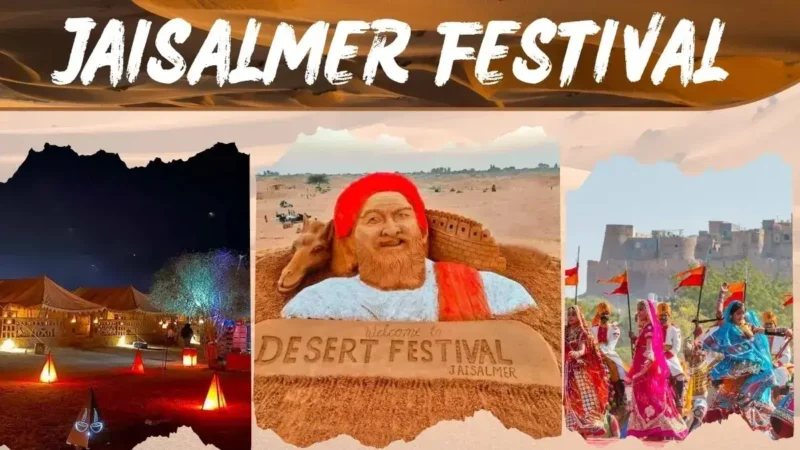
Jaisalmer does not need a reason to be special. It already has all of that, from the golden fort and the havelis to the endless Thar light. But every February, the city goes up another level. The Maru Mahotsav brings camel races, Kalbeliya dancers, Manganiyar musicians, and thousands of visitors together on the sand dunes for three unforgettable days.
Here is what you need to know if you are planning a trip to Jaisalmer Desert Festival 2027

What is Maru Mahotsav and Why is it Celebrated? 

Maru” means “desert,” and “Mahotsav” means “festival”; together, Maru Mahotsav stands for the festival of the desert.

The Rajasthan Tourism Development Corporation launched it in the 1970s to bring the folk traditions of the Thar to a wider audience. The Langas, Manganiyars, Bhopa ballad singers, and local artisans had been keeping this culture alive for centuries in relative obscurity. The festival gave them a proper stage.

The main motive behind this festival celebration is to keep the local Rajasthani culture alive and spread it to the visitors coming from various cities and countries.

NOTE: A lot of people mix up Maru Mahotsav with the Pushkar Camel Fair. Both festivals are celebrated in Rajasthan, and both involve camels, but they are completely different events that occur in different cities, in different months, and for different purposes. Double check your dates before you book flights or hotels. 

In Which Month Is the Jaisalmer Festival Celebrated?

Every year in February, timed to the full moon of the Hindu month of Magh.

February is the best time to visit Rajasthan, as during this time the weather during the day remains warm while the nights remain colder.

TIP: Since the festival follows the lunar calendar, the exact dates change slightly every year. Always check the official Rajasthan Tourism website before you lock in flights or hotels.

How Long Does the Desert Festival Last?

The festival goes for 3 days and 3 nights but the real question is what happens in these 3 days in the desert festival. You will get a change to experience the Rajasthani folk music, traditional dance performances, camel races, cultural competitions, local handicrafts, and desert activities.

Distance to Jaisalmer from Major Cities

Jodhpur to Jaisalmer Distance

285 to 300 km | 4.5 to 5.5 hours via NH25

By Car: Hatchback from Rs 2,800. A Toyota Rumion on rent in Jodhpur costs you around Rs 3,500 to Rs 4,200 with seats for 6 to 7 people, perfect for a small group.

By Train: Jaisalmer Express takes around 6 to 7 hours to complete the journey. Good if you are not in a rush and have a limited budget.

By Bus: RSRTC runs this route. It fills up fast in festival season so make sure to book early.

Jaipur to Jaisalmer Distance

570 to 600 km | 8 to 10 hours via Jodhpur or Bikaner

By Car: Solo traveller or couples can go for a sedan, which starts from the range of Rs 5,500. For larger groups, a luxury Urbania van rental in Jaipur can be an ideal choice for 12 to 17 people. It has recliner seats, an LED screen and AC to make your 9-hour drive comfortable.

By Train: Ranikhet Express overnight. Wake up in Jaisalmer and save a hotel night. Book 4 to 6 weeks ahead.

By Bus: Overnight Volvo buses can be an ideal choice for a solo traveller or couple travelling together. It is a budget-friendly option.

Udaipur to Jaisalmer Distance

500 to 520 km | 8 to 9 hours via Pali and Jodhpur

By Car: Solo travellers or couples can book a sedan, starting from Rs 5,000. For groups, a Tempo Traveller or Urbania van rental in Udaipur works better. You can choose an urbania based on your group size, as it comes in various ranges of seating capacities.

By Train: There is no direct train between Udaipur and Jaisalmer. A cab or an overnight bus is the simpler choice for this route.

By Bus: Overnight Volvo buses run this route and are a budget-friendly pick for solo travellers or couples.

What Happens at the Desert Festival?

Jaisalmer Desert Festival Activities

Camel Race & Camel Decoration Competition 

Decorated camels racing across open sand. The decoration contest that comes after it is just as good. Some of these animals look like they are dressed for a wedding.

Folk Music & Dance 

The Langas and Manganiyars perform every evening. If you have never heard Manganiyar music live, it will stop you where you stand. The Kalbeliya dance, in which women in spinning black skirts with silver embroidery participate. It is a UNESCO-listed site and the best performance you will see anywhere in India.

Turban Tying Competition (Pagdi Bandhai) 

Men from different parts of Rajasthan each tie a turban in their own regional style. The variety of colors, techniques, and draping methods is far more interesting than it sounds. Good photos guaranteed.

Mr. Desert & Miss Moomal 

Traditional attire and personality competitions, judged on cultural knowledge and presentation. The finals happen at Sam Dunes on the last evening.

Longest Moustache Competition 

In this competition, men with long moustache participate and he who has the longest mustache wins. It is one of the best competitions held at the desert festival.

Tug of War & Matka Phod 

In this game, there are two village teams that compete to smash the clay pot hanging above and in another game, two groups pull the rope and whoever pulls it to the red mark wins.

Heritage Walk 

An early morning walk through the old city lanes exploring the fort walls, havelis, tiny temples, and narrow sandstone streets. Go before 9 AM while the light is golden and the lanes are still quiet.

Desert Overnight Camp 

It is not part of the festival but if you are in Jaisalmer, you must get the experience of the desert safari in Rajasthan; it includes camel safaris, desert night camping in the open sky and traditional folk performances. 

Jaisalmer Desert Festival 2026 Dates & Key Timings

The Jaisalmer Desert Festival 2026 is expected on February 10, 11 and 12, 2026, ending with the Sam Dunes finale on the full moon evening of February 12. 

Day Venue Key Events 
1Jaisalmer Fort & City Grounds Opening ceremony, Kalbeliya dance, folk music 
2Gadisar Lake & City Grounds Turban tying, moustache competition, camel decoration 
3Sam Sand Dunes (42 km from city) Camel race, Mr. Desert & Miss Moomal, moonlit folk concert 

Timings: Daytime events run 10 AM to 4 PM. Evening shows from 6 PM. The Sam Dunes finale starts around 4 PM and runs past 9 PM.

Entry: Most events are free to attend. Some fort performances have a small fee. Keep Rs 500 in cash, as not every counter takes UPI.

For 2027: The festival is expected around February 28 to March 1–2, 2027, since the Magh full moon falls later that year. Confirm exact dates on the Rajasthan Tourism website as you get closer.

Festival Highlights of Desert Festival (Maru Mahotsav)

Jaisalmer Desert Festival Highlights

Moonrise at Sam Sand Dunes

Full moon over the Thar, musicians playing, thousands sitting on the open sand. If you only catch one evening of the festival, make it this one.

Kalbeliya Dance

Women spinning in perfect sync, skirts flaring wide, live music building underneath. You do not need to understand it to feel it.

Camel Polo

The camels have their own opinions about direction. The riders disagree. The crowd is very entertained.

Bhopa Phad Performance

A scroll storyteller narrating an epic ballad from memory all night. Even twenty minutes tells you everything about why this tradition is still alive.

The Fort at night 

The golden sandstone lit up after dark. Go after 7 PM. Make sure your phone is charged.

Jaisalmer Desert Festival Tour Package

4 Days / 3 Nights – Desert Festival Package

Starting from Rs 8,500 per person (double occupancy, group of 4 or more)

What is included:

  • Pickup and drop-off from Jodhpur by car, Tempo Traveller or bus rental in Jodhpur 
  • 3 nights hotel stay in Jaisalmer (budget to mid-range; upgrades available)
  • 1-night desert camp at Sam Sand Dunes with dinner and folk music evening
  • City sightseeing of the fort, havelis, Gadisar Lake
  • Sam Dunes transfer for the festival finale
  • Driver, fuel, tolls and all local transfers

What is not included: Train or flight to Jodhpur, daily meals (except camp dinner), monument entry fees, and personal shopping.

4-Days Complete Itinerary for Jaisalmer Festival

Day 1: Morning departure from Jodhpur to Jaisalmer. Arrive by afternoon and check into the hotel. Head out to Jaisalmer Fort and Patwon Ki Haveli before sunset. Attend the festival opening ceremony in the evening. Dinner on your own at some great rooftop spots with fort views.

Day 2: Full Festival Day Early morning at Gadisar Lake before the crowds arrive. Then to the festival grounds for the turban-tying and mustache competitions. Camel decoration contest in the afternoon. End the day at the fort for the Kalbeliya and folk music performances.

Day 3: Sam Sand Dunes & Finale Check out after breakfast and drive to the desert camp at Sam (42 km). Settle in and have lunch. At 4 PM, head to the dunes for the camel races, Mr. Desert and Miss Moomal finals and the moonrise concert. Back to camp for dinner. Sleep under the stars.

Day 4: Return to Jodhpur  Morning chai at the camp. One last stop in Jaisalmer for shopping if you need it. Drive back to Jodhpur.

Best Places to Stay at the Desert Festival

Desert Camps at Sam Sand Dunes 

If you are here for the festival, stay at least one night in a desert camp. Swiss tents, bonfire, folk musicians, camel rides at sunset, and a sky with no light pollution. Rates run Rs 2,000 to Rs 7,000 per night. Book 6 to 8 weeks before the festival to get a camp.

Hotels Inside Jaisalmer Fort 

Staying inside the living fort is a completely different experience. Small properties, full of character. Killa Bhawan and 1st Gate Heritage Home are the well-known picks. Book even earlier than the camps.

Heritage Hotels in the City 

Suryagarh, Hotel Nachana Haveli, and Hotel Rang Mahal are each at a different price point and offer different experiences. Confirm the prices online, as each has different pricing and during the festival, they change their regular prices. 

Budget Guesthouses 

Clean, central, Rs 600 to Rs 1,500 per night. Moomal Hotel and Hotel Pleasant Haveli are reliable picks within walking distance of the fort and the main bazaar.

Quick reminder

Book 2 to 3 months ahead for festival dates. Walk-in availability during Maru Mahotsav is almost zero, and whatever is left costs you double. Please confirm the prices from the official sources before making any decision.

Famous Places to Visit Near Jaisalmer

Famous Attractions near Jaisalmer

Jaisalmer Fort (Sonar Quila) 

It is a UNESCO World Heritage Site. It is one of the only living forts in India with residents still inside. Go at sunrise or the hour before sunset for the best light on the sandstone.

Patwon Ki Haveli 

The total of five havelis built by Jain merchants in the 1800s are covered in some of the most intricate carved stonework in Rajasthan. Give it an hour.

Sam Sand Dunes 

It is located 42 km from the city, the festival finale venue and the best sunset spot in the region. Camel rides and quad biking available year-round.

Gadisar Lake 

It is a 14th-century reservoir with temples and cenotaphs around the edges. Calm, photogenic, free to enter. It is best to visit in the early morning when the birds are out.

Kuldhara Village 

A haunted village, as it is said that the entire village of 1,500 families was abandoned overnight in 1825. No one knows exactly why. The ruins are well-preserved and the story is genuinely strange. 

Lodhruva 

The original Bhati Rajput capital before Jaisalmer was built. It is located around 15 km from the city. Beautifully restored Jain temples and almost no other visitors.

Tanot Mata Temple 

It is located around 130 km toward the Pakistan border. Pakistani shells that landed in the temple compound during the 1971 war never exploded. The temple kept them on display. It is a striking place with a story that stays with you. You need a permit to get there from the BSF office in Jaisalmer before you go.

FAQs

Q1. When should I book hotels for the Jaisalmer Desert Festival? 

At least 2 to 3 months ahead. Desert camps at Sam and hotels near the fort go first. If you wait till a month out, expect limited options and high prices.

Q2. Is this a good trip for families with kids? 

Yes. Camel races, folk music and turban competitions are what kids like best. Just remember to pack extra layers for the evenings because the temperature drops fast after dark.

Q3. Is Jaisalmer safe to visit given its proximity to the Pakistan border? 

The city is completely safe with steady tourist traffic all year. Border areas like Tanot require a BSF permit and should be visited in daylight only. Thousands of tourists do it every year without any issue.

Q4. Is there an entry fee for the festival? 

Most outdoor events are free. There are some shows in the fort and some other venues, ranging from Rs 100 to Rs 300. Carry cash, as UPI is not accepted everywhere.

Q5. How to get back from Sam’s Sand Dunes at late night? 

If you have a private cab or Tempo Traveller, your driver will bring you back. With one, shared jeeps and private cabs are available at the venue. Agree on the price before you get in. The easiest option is to spend the night at a desert camp and drive back in the morning when it is light.

Conclusion

You will find plenty of reasons to visit Rajasthan. But very few experiences match what Jaisalmer feels like during these three days in February: the music, the desert light, and the full moon rising over the dunes while thousands of people sit on the sand around you.

Plan early. Get your transport sorted well before the dates, especially if you are travelling with a large group. Book that desert camp as soon as you confirm your dates. And take at least one extra day just to walk the old city slowly, without a schedule.

Marwar Festival Jodhpur 2026 – Complete Travel Guide

If you have been looking for a reason to visit Jodhpur, the Marwar Festival is it. Every year in October, this city comes alive with folk music, camel shows, traditional dance, local food and the kind of energy that is hard to find anywhere else in Rajasthan.

This guide has everything you need before you plan your trip, including dates, venues, what to eat, what to buy, how to reach them, and a few tips that will actually help.
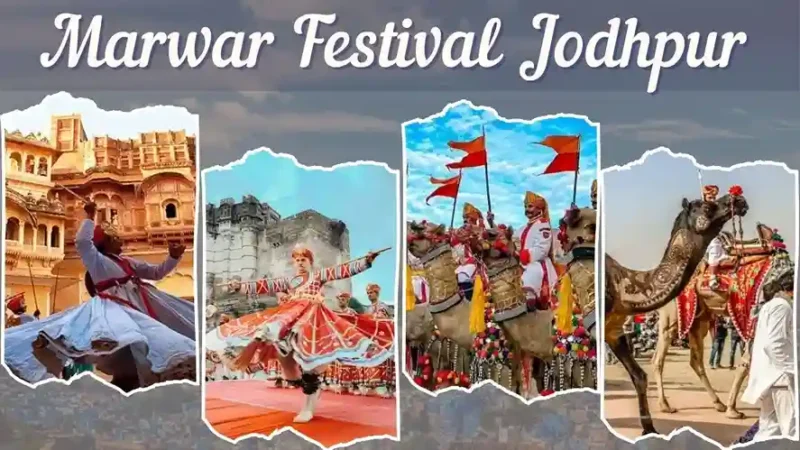
Marwar Festival in Jodhpur 2026 Date

The Marwar Festival Jodhpur is celebrated every year on the full moon night of the Hindu month of Ashwin. This year it will fall on October 24 and 25 in 2026.

The festival runs for two days and two nights. Official dates are announced by Rajasthan Tourism closer to the time, so check their website before booking anything.

What is the Marwar Festival?

The Marwar Festival is also called the Maand Festival. It was started by the Rajasthan Tourism Development Corporation to keep the folk culture of Marwar alive and bring it to a larger audience.

The name “Marwar” comes from the Sanskrit word “Marusthal,” which means “Land of Desert” but some believe that Marutsthan means the “Land of Death“. It got this name because of the dry and harsh desert land, which can sometimes be deadly. But anyone who has been here will tell you that the people of Marwar are anything but harsh. They are warm, proud of their culture and absolutely love their music.

At the festival, folk singers perform ballads about brave Rajput warriors. Women in the crowd listen to these songs and pray for their loved ones, continuing a tradition that is hundreds of years old. The music, the dance, the costumes, everything has a story behind it here.

Quick Tip: Do Not Confuse Mewar and Marwar

This is one of the most common mistakes first-time visitors make. Mewar is around Udaipur and has its own Mewar Festival in spring. Marwar is around Jodhpur and its festival is in October. Different cities, different seasons, different festivals. Always double-check before you book.

Where is the Marwar Festival Celebrated?

Marwar Festival Place

The festival is spread across some of the most iconic spots in Jodhpur.

Mehrangarh Fort

This is where most of the action happens. Mehrangarh Fort sits about 400 feet above the city and the performances inside the fort courtyard, under the full moon, are something else entirely. The fort also has a good museum if you want to understand the history before watching the shows.

Umaid Bhawan Palace

One of the largest private residences in the world, Umaid Bhawan hosts special cultural events during the festival. Part of it is a hotel; part of it is a museum open to visitors. The palace grounds during festival time feel very royal.

Mandore Gardens

Mandore was the old capital of the Marwar kingdom, about 9 km from Jodhpur city. The gardens here have ancient royal cenotaphs and are used for heritage events during the festival. A quiet but very meaningful venue.

What is Marwar Famous For?

The Blue City: Jodhpur is called the Blue City because of the indigo-painted houses around Mehrangarh Fort. The view from the top of the fort, thousands of blue houses spreading across the hillside. It is one of the most photographed sights in India. 

Rajput Heritage: Marwar is Rajput country. The palaces, the forts, the stories of bravery. This whole region is shaped by the warrior culture of the Rajputs.

Folk Music: The Langas and Manganiyars are two musician communities from Marwar whose music is now known worldwide. Hearing them perform live at the festival is a completely different experience.

Food: The recipes of Marwari food show that they were made for desert life. Most of the dishes here are made of besan flour, lentils, dried vegetables, ghee and spices. You will find dishes like Dal Baati Churma, Gatte Ki Sabzi, Ker Sangri and Bajre Ki Roti everywhere in Marwar and once you try them, you will know why people love this food so much.

Textiles and Handicrafts: Bandhani, block printing, leheriya and lac bangles are what Marwar is known for. You will spot these in markets across India but buying them here, straight from the people who make them have a different experience altogether. The craft has been passed down through families for generations and the quality shows in every piece.

What Happens at the Marwar Festival?

Marwar Festival Celebrations

Folk Music and Dance Performances

This is the soul of the whole festival. Local artists perform Ghoomar, Kalbelia, Bhavai, and Fire Dance with full energy every evening. The Langas and Manganiyars play through the night around Mehrangarh Fort. If you only attend one event during the two days, make it one of these evening performances.

Camel Tattoo Show and Horse Parade

Decorated camels and horses parade in front of the crowd with colorful costumes and accessories. Riders show off their skills and formations. The horse parade happens, which is called Ashwa Pratirodh. It is a tribute to the warriors of Marwar and draws a big crowd every year.

Traditional Competitions

Turban Tying (Pagdi Bandhai): Men from different parts of Rajasthan tie the traditional Rajasthani turban in their own regional style. Very interesting to watch and very fun to photograph.

Moustache Competition: Rajasthani men take their moustaches seriously and this competition proves it. The entries range from thick and curled to ones that stretch well beyond belief.

Miss Marwar: A competition for women dressed in traditional Rajasthani attire, judged on grace, appearance and knowledge of local culture.

Tug of War: Village teams compete in this classic contest of strength. The moment the rope goes tight, the crowd gets loud and everyone around you picks a side. Simple event, great energy and easily the loudest part of the festival. 

Heritage Walk

A guided walk through the old lanes of Jodhpur, which show the grand havelis, ancient temples, spice markets and streets that have barely changed in centuries. Best done early in the morning when the city is quiet and the light is just right.

Things to Buy at the Marwar Festival

Local Things At Marwar Festival

Rajasthani Textiles and Bandhani

Rajasthan is known for its Bandhani, the tie-dye fabric. “Bandhani” means “to tie. It comes in different colors and patterns, such as boond, kodi, ekdali, trikunti, chaubandi and dungar shahi.

Handicrafts and Wooden Furniture

Festival stalls present handmade wooden articles, camel bone items and lac work. Boxes and picture frames are small, easy to bring back, and make great gifts.

Mojari (Traditional Footwear)

Mojari is traditional handmade Rajasthani footwear with pointed toes and detailed embroidery. They are made by hand by local cobblers and are available in both men’s and women’s styles. A quality pair from the festival market is long-lasting. Mochi Bazaar in Jodhpur is a famous market for traditional footwear.

Spices and Dry Fruits

Jodhpur spice markets are famous and the festival stalls carry the same quality of red chili, coriander, cumin and the well-known Jodhpuri mirchi. Fresh cashews, almonds and raisins are also available at fair prices. Make sure to buy some authentic Rajasthani spices from the Marwari festival.

Must-Try Local Cuisine at the Marwar Festival

Local Cuisine at the Marwar Festival

Dal Baati Churma

It is the most famous dish in Rajasthan. It is made with wheat rolls baked over a coal fire, served with lentil curry and churma, which is crushed wheat mixed with ghee and jaggery. Having this at a festival stall, cooked the old way, is a very different experience from a restaurant version.

Mirchi Vada

Jodhpur’s most famous street snack. A large green chili stuffed with spiced potato, coated in gram flour batter and deep-fried. Try it from a stall near the festival and you will understand why people keep coming back for more.

Ker Sangri

It is a traditional Rajasthani dish prepared from the dried ker berries and sangri beans, both of which grow wild in the desert. It is made with local spices and has a sour, earthy taste found nowhere else in the region.

Mawa Kachori

A fried pastry filled with mawa and dry fruits, dipped in sugar syrup. Sweet, rich and very filling. Buy it fresh and hot from a local sweet shop near the festival grounds.

How to Reach Marwar?

By Road – Car or Bus

 Jodhpur has good road connections to most cities in Rajasthan. If you are coming from Jaipur, Udaipur, Ajmer or Bikaner, you will find RSRTC buses running on all these routes. Private Volvo buses are also a good pick if you want a smoother ride.

For those who like to travel at their own pace and stop wherever they feel like, taking a car on rent makes more sense. The best car rental in Jodhpur is easy to find near the railway station and airport. You can go for a self-drive or hire a car with a driver, whichever works better for you.

By Train

 Jodhpur is a well-known railway junction and you will get trains from Delhi, Jaipur, Mumbai, Ahmedabad and Kolkata without much trouble. If you are coming from Delhi, the Mandore Express is a good option. From Jaipur, the Intercity Express works well. The station is right in the middle of the city so reaching your hotel from there takes very little time.

By Air

Jodhpur Airport code is JDH and it gets daily flights from Delhi, Mumbai and Jaipur. IndiGo, Air India and SpiceJet all fly on these routes. The airport is around 5 km from the city center. Once you step out, you can take a cab or auto-rickshaw

How to Reach from Jaipur and Udaipur?

From Jaipur

By Car: A hatchback will cost you around Rs 3400, a sedan like a Dzire or Etios comes to around Rs 3500 to 3800 and an SUV like an Innova starts from Rs 4900. The drive is about 5 to 6 hours on NH48 and the road is comfortable throughout. If you are coming with a large group, booking a Tempo Traveller on rent in Jaipur is a great way to keep everyone together and split the cost between the group. 

By Bus: RSRTC operates government buses on this route and private operators such as Jain Travels, Jakhar Travels and MR Travels also have daily services. A non-AC seat starts at around Rs 350 and a Volvo AC sleeper goes up to Rs 1500. The ride takes somewhere between 5.5 and 7 hours depending on which bus you pick. Buses start running from as early as 12:40 AM and the last one leaves around 11:30 PM so you have plenty of options through the day.

By Train: Jaipur to Jodhpur has good train options. The JP JU Express (22977) is a daily train that leaves Jaipur at 6:00 AM and gets to Jodhpur by 11:10 AM — a solid morning option. The Mandore Express (22995) leaves at 2:35 AM if you want to travel overnight. If you want the fastest ride, the Vande Bharat Express (26482) departs at 7:05 PM and reaches Jodhpur by 11:20 PM. Sleeper class fares start from around Rs 145.

From Udaipur

By Car: A hatchback starts at around Rs 3050, a sedan comes to roughly Rs 3300 and an SUV starts from Rs 4200. The drive takes about 5 hours and if you take the Ranakpur route, the road is smooth and the scenery along the way is really good.

By Bus: RSRTC, Jain Travels, Shree Devnarayan Travels & MR Travels are good providers on this route. A non-AC seat begins at about Rs 300 and ends at Rs 1200 for a Volvo AC sleeper. The trip takes about 5.5 to 6 hours. Buses also run overnight, with the first bus leaving at around 1:30 AM and the last one at about 11:50 PM.

By Train: There is no direct train from Udaipur to Jodhpur. You would have to change at Ajmer and the whole journey ends up taking 9 to 10 hours. Honestly, a bus or cab saves you a lot of time on this route.

NOTE: The fares and timings above are rough estimates. Please check and confirm before you book anything.

Suggested Read: Udaipur to Jodhpur by Road

3 Days Jodhpur Marwar Tour Package 

Day 01: Arrival and Sightseeing in Blue City 

Arrive in Jodhpur in the morning and check in to the hotel. Once you are settled, head out to the old city and walk around Sardar Market and Ghanta Ghar, as both are close to each other, so it does not take long. In the evening, go to Mehrangarh Fort for the opening ceremony. After that, sit down somewhere nearby and have dal baati churma for dinner. Good start to the trip. 

Day 2: Festival Day at Mehrangarh Fort

Head to the fort early before the crowds arrive. Spend some time in the museum. Watch the Camel Tattoo Show and Horse Parade, then the Turban Tying and Moustache competitions in the afternoon. In the evening, catch the folk music and dance performances under the full moon. Try mirchi vada and mawa kachori from the stalls.

Day 3: Mandore Gardens and Shopping

Morning at Mandore Gardens. After lunch, hit the local markets for Bandhani fabric, mojaris and spices. Late afternoon stop at Jaswant Thada before heading home.

Travel Tips for the Marwar Festival

What to Wear: October in Jodhpur is warm during the day but once the sun goes down it gets cool pretty quickly. Light cotton works fine for daytime. Just make sure you carry a jacket or shawl for the evening shows because those are held outdoors and the nights can get chilly.

Entry Fees: Most of the outdoor events at the festival do not cost anything. A few performances inside Mehrangarh Fort may have a ticket fee and the fort museum charges separately. Keep some cash on you because not every counter at the venue takes cards or UPI.

Photography: The festival gives you some really good moments to photograph. Most events are fine with it but if you want to click someone during a performance or competition, just ask first. Most people are happy to let you.

Safety: Jodhpur is a pretty safe city and solo travellers, including women, generally have no issues here. During the festival the grounds get crowded so just keep your bag in front of you and do not leave anything unattended.

Book Early: Hotels near Mehrangarh Fort get booked out fast once the festival dates are announced. Try to sort your stay at least two to three months before so you get a good room at a fair price and not whatever is left at the last minute.

Conclusion

The Marwar Festival is one of those trips that stays with you. The music at the fort, the food from the stalls, the colors in the market, Jodhpur during the festival is a version of Rajasthan that very few people forget.

Plan your visit between October and March and book your stay early. For getting around the city comfortably, an auto-rickshaw works for short trips, but if you are travelling with a group, hiring a Force Urbania in Jodhpur is one of the best decisions you can make. It is spacious and comfortable, and everyone stays together. The desert puts on a very good show. Come and see it for yourself. Book tickets and hotels early to get bookings on your desired day. 

Khamma Ghani Sa

Best Desert Safari in Rajasthan 2026

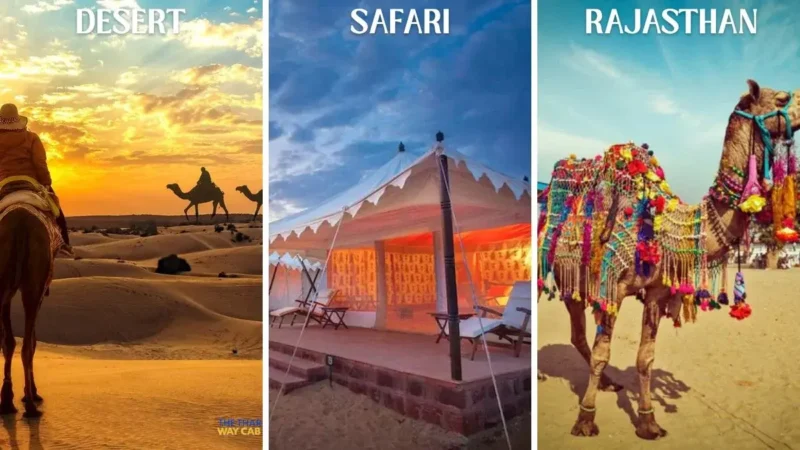
When it comes to adventure, Rajasthan never misses a chance to amaze its tourists. Whether you are exploring ancient forts, temples and palaces. Not just forts and palaces but it also has endless golden dunes. A desert safari in Rajasthan is one of the best experiences that you can have. Explore the places for the best desert safari in Rajasthan in 2026.
JAISALMER:

Jaisalmer – Rajasthan

Jaisalmer is known as the heart of the desert. It is popular for desert safari and night safari camps. A perfect place to experience the rich culture of Rajasthan with its traditional night performances.

SAFARI PRICE

Camel Safari: Rs 800 – Rs 1500 per person

Jeep Safari: Rs 1500 – Rs 2500 per person

Desert Camp Stay: Rs 2000 – Rs 7000 per person

OSIAN:

Osian _ Rajasthan

Osian desert is located 65 kms and it takes around 1 to 1.5 hours from Jodhpur to reach there. It is a less crowded place than other deserts and offers the best experience. If you are travelling from Jodhpur, you can take a Jodhpur to Osian taxi service or tempo traveller on rent for a group to reach there comfortably.

SAFARI PRICE:

Camel Safari: Rs 800 – Rs 1500

Jeep Safari: Rs 1000 – Rs 2000

Camp Stay: Rs 2500 – Rs 6000

PUSHKAR:

Pushkar – Rajasthan

Pushkar is famous for having the only Brahma Temple called Jagatpita Brahma. Its one of the world’s largest camel fair attracts thousands of visitors every year. It is a perfect choice to do a camel safari and desert camping with family.

SAFARI PRICE:

Camel Safari: Rs 700 – Rs 1200

Desert Camp: Rs 2500 – Rs 4000

BIKANER:

Bikaner – Rajasthan

Bikaner is located 330 kms away from Jaipur and it takes around 5 to 6 hours to reach there by road. It can be an ideal choice for budget travellers to do a camel safari in Bikaner. It is less crowded than Pushkar and Jaisalmer but gives the best experience. 

Group travellers who are on a Rajasthan tour can consider taking a cab, minibus or tempo traveller on rent in Jaipur to travel across various cities comfortably. 

SAFARI PRICE:

2 Hour Camel Safari: Rs 1500 – Rs 2000

Half Day Safari: Rs 1500 – Rs 2500

Full Day Safari: Rs 2000 – Rs ,000

Overnight Desert Camp: Rs 3000 – Rs 6000

CONCLUSION:

Rajasthan is the royal choice for doing adventures with family, in a group or solo. A desert safari can be a great experience for people of all age groups. While Jaisalmer and Osian are famous for their night safaris, Pushkar is popular for the camel fair and camping whereas Bikaner gives the best camel safari. Each destination offers a unique and memorable experience. For your next trip, keep Rajasthan on your bucket list. Do not miss finding out the best places to visit in Rajasthan before planning your tour as these places offer adventure, culture and scenic beauty for an unforgettable tour.

Best Places to Visit in Rajasthan for a 3 Days Trip

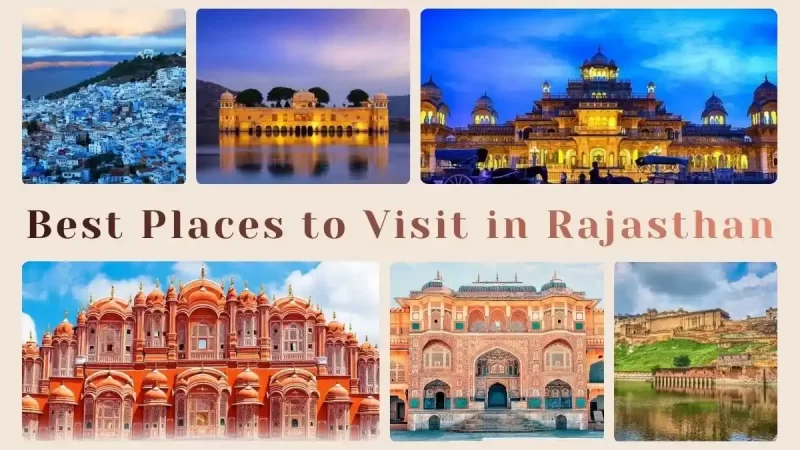
Rajasthan is the land of kings, famous for its vibrant and rich culture. Every corner of this state holds a royal history, the best architecture, colorful traditions and delicious cuisine. Explore the best places to visit in Rajasthan such as Jaipur, Jodhpur, Udaipur and Jaisalmer are famous for their unique blend of cultural heritage. 

Let’s dive into knowing more about these places.

Best Places to Visit in Jaipur 

Jaipur – The Pink City

Jaipur is called the Pink City. It is famous for its royal architecture, bustling streets and rich cultural heritage. It is one of the most popular destinations in Rajasthan and offers a complete travel experience. You can explore various places in Jaipur such as

Hawa Mahal – It was built from red and pink sandstone by Maharaja Sawai Pratap Singh in the year 1799.

Amber Fort – It is a famous UNESCO World Heritage site built by Raja Man Singh I in 1592

City Palace Jaipur – It is a royal residence built by Maharaja Sawai Jai Singh II in 1727.

Jantar Mantar – It is a UNESCO world heritage site built by Rajput king Sawai Jai Singh in 1734.

Jaipur has many attractions to visit and most of these places are located at just some distance from each other. Many group tourists choose to travel by hiring a Tempo Traveller on Rent in Jaipur as it provides them a convenient journey.

Best Places to Visit in Jodhpur

Jodhpur – The Blue City

Another famous place that comes to mind while talking about Rajasthan is Jodhpur. It is known as the blue city. This city offers plenty of famous attractions to explore. Here are top places to visit in Jodhpur.

Mehrangarh Fort – It is one of India’s largest forts built by Rao Jodha in 1459.

Jaswant Thada – It is known as the “Taj Mahal of Marwar”. Built by Maharaja Sardar Singh in 1899.

Umaid Bhawan Palace – It is a palace of Maharaja Umaid Singh. This is a residence of his grandson, Gaj Singh which is now managed by Taj Hotels.

These mentioned places are must-visits for every tourist. To make your group tour more royal, consider hiring a luxury Force Urbania in Jodhpur to commute comfortably between attractions and save time during the trip.

Best Places to Visit in Udaipur

Udaipur – The City of Lakes

Udaipur is known as the City of Lakes. It provides beautiful and breathtaking views of the lake which appear more royal at night. You can explore some famous places in Udaipur such as

City Palace in Udaipur—It is a 450 years old palace built by Maharaja Udai Singh II in 1559. It is now a museum where you will find various sculptures, curios, antiques and inscriptions.

Lake Pichola – It is a man-made lake that offers a stunning lake view. It is located in the middle of the lake where you can also do boating and explore its beauty.

Jag Mandir—It is also known as the “Lake Garden Palace” built by the Maharanas of Mewar. This mandir was built on an island in Lake Pichola. 

Tourists visiting Udaipur must explore these stunning places whether you are travelling with family or a group. To roam around with comfort, groups can consider getting a Tempo Traveller Hire in Udaipur for easy commutes between places based on their group size and needs.

CONCLUSION:

Rajasthan is a perfect mix of culture and heritage. It offers its visitors a royal experience that can be memorable. We have picked the best places that can make your Rajasthan tour unforgettable. Visiting these places in 3 days can be difficult, so it is suggested to choose a comfortable vehicle such as a Tempo Traveller, Bus or Car on Rent in Jodhpur, Udaipur and Jaipur to make your tour hassle-free and convenient. With proper planning,  make your Rajasthan trip royal and special.

Exit mobile version